Mold Removal: Containment, Cleaning and Drying
Mold removal is the physical clean-out of affected materials and surfaces, followed by drying and a check that the area is clean. Spraying a product on the surface or painting over a stain does not do it, because mold roots into porous materials and the spores stay in the air until they are filtered out.
Describe the job and add your city. Free to request, no obligation.
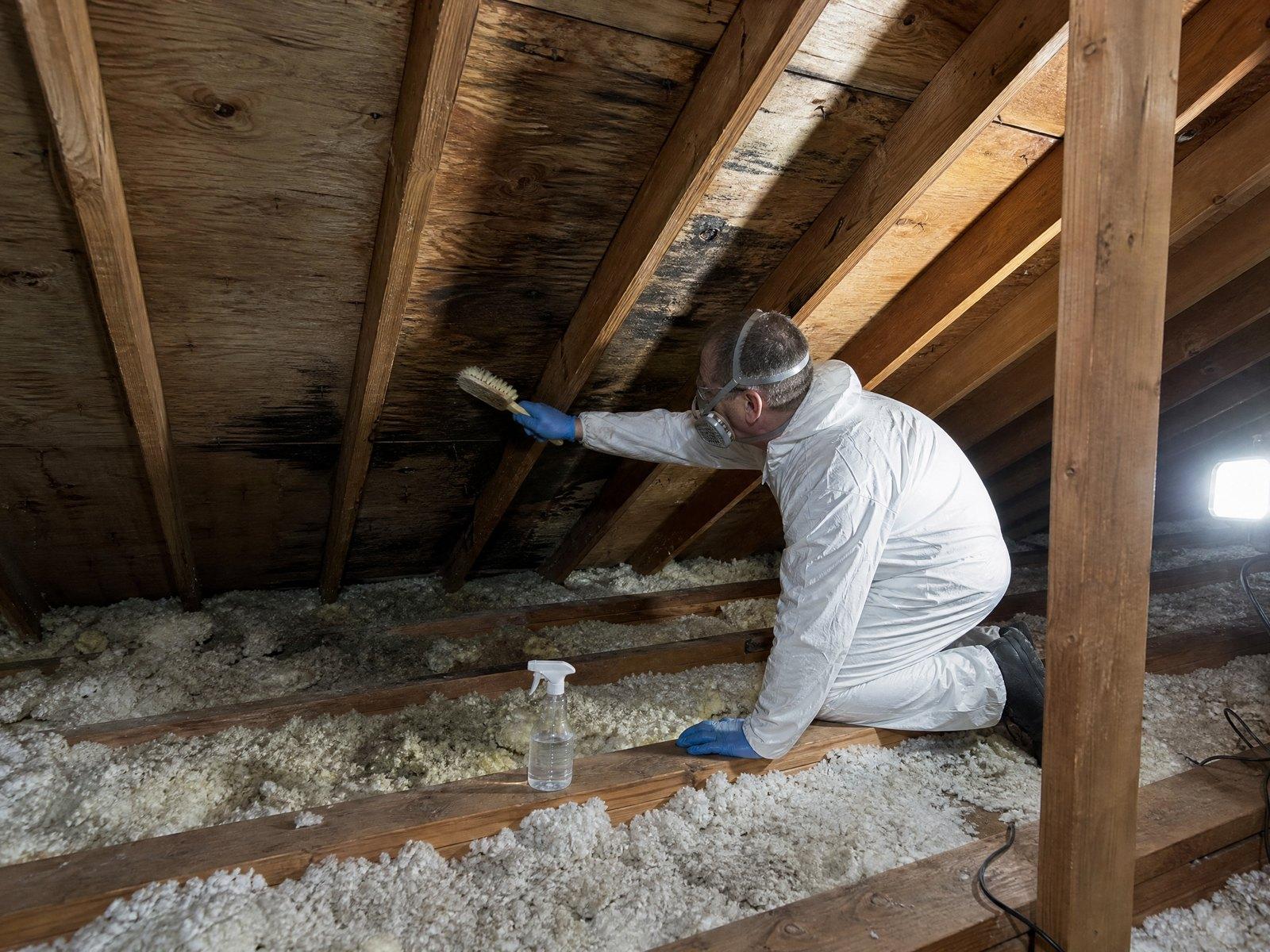
The work area is sealed off with plastic sheeting, and a machine with a HEPA filter runs to keep the air inside under negative pressure, so spores are pulled out instead of drifting into the rest of the home. Heavily affected porous materials such as drywall, insulation and carpet are cut out and bagged. Wood framing and concrete can usually be cleaned by HEPA vacuuming, wire brushing, sanding or damp wiping.
Everything depends on the moisture. If a leak, a high humidity level or a ventilation fault is still feeding the growth, the mold returns after the cleanup, so a proper job lists the repair or the next step for the water source alongside the cleaning.
What the work includes
- Setting up containment with sheeting and a decontamination entry
- Negative air machines with HEPA filtration during the work
- Removing and bagging damaged drywall, insulation, carpet or trim
- Cleaning wood and concrete by HEPA vacuuming, wire brushing or sanding
- Damp wiping of surfaces and HEPA vacuuming of the area again
- Drying with fans and dehumidifiers until readings are normal
- Disposal of waste in sealed bags
- A final visual check and notes on moisture repairs
Signs that call for removal, not just cleaning
Mold covers more than a small patch or keeps returning after wiping
Drywall, carpet or insulation is soft, stained or smells strongly of damp
Mold is growing on framing or sheathing, not only on surface paint
The area has been wet for more than a day or two after a leak or flood
Someone in the home has asthma, allergies or a weakened immune system
A building is being prepared for sale, renovation or a new tenant
How the work goes, step by step
Define the scope
The affected areas, materials and likely moisture source are mapped from an inspection or a site visit.
Isolate the area
Sheeting and negative air keep the work contained, and vents and doors are sealed.
Remove and clean
Damaged materials come out, and framing and concrete are cleaned and vacuumed.
Dry and verify
Fans and dehumidifiers dry the area, and readings confirm that moisture has dropped.
Close and rebuild
The area is released for repair, with notes about the moisture fix and monitoring.
What changes the price
- Area affected
- Cost generally rises with the square footage of contaminated surfaces.
- Materials removed
- Cutting out and replacing drywall, insulation or flooring adds to the price.
- Access and location
- Attics, crawl spaces and tight corners take longer and need more protective gear.
- Containment and equipment
- Larger work areas need more sheeting, machines and drying time.
- Hidden mold
- Mold behind walls or in ductwork is only found once the surface is opened.
- Rebuild
- Replacing what was removed is often a separate repair line.
What a good quote spells out
- A written scope with the areas, materials to be removed and the cleaning method used
- Containment and air filtration described, not just a line saying the area will be sealed
- The moisture source and how it is to be fixed, listed separately from cleaning
- Whether clearance testing is offered or recommended afterward
- What is left for rebuilding, so you can compare the whole cost
Mold Removal & Remediation: questions people ask
Can bleach kill mold on its own?
Bleach may lighten the surface but does not reach into porous materials, and it does not fix the water. Removing the growth and drying the area is the lasting approach.
Do occupants have to leave the house during mold removal?
For small, well-contained jobs people often stay in other rooms. For large work areas or when someone is sensitive, many owners choose to stay elsewhere for a day or two.
Will mold come back after removal?
It can if the moisture source remains. That is why the quote should include the leak repair, ventilation change or dehumidification that keeps the area dry.
How long does mold remediation take?
Small areas can take a day or two, and larger jobs several days plus drying time. Rebuilding is extra.
Other Saniclair services
Mold or a Musty Smell? Get It Looked At.
Fill out the quote form with your city and what you are seeing. A local specialist follows up to book an inspection and give you a written quote. Free to request, no obligation.
Request a free quote →