Basement Mold Removal, From Wet Drywall to Damp Slab
Basements are cool, close to the ground and often damp, which is why they are the most common place to find mold in a house. Finished basements hide it well: behind drywall, under carpet and in wall insulation, sometimes for years before a smell shows up.
Describe the job and add your city. Free to request, no obligation.
A cleanup typically starts by opening the affected walls and taking out the materials that stayed wet, such as drywall, insulation and carpet underlay. Framing and concrete are then cleaned, HEPA vacuumed and dried before anything goes back. Painting over stained drywall hides the problem for a while and does not stop it.
The moisture has to be identified too. It can come from a foundation crack, a high water table, condensation on cold walls, a leaking pipe or a dryer or bathroom vented into the basement. The right fix depends on which one it is, so ask the specialist to name it in the quote.
What the work includes
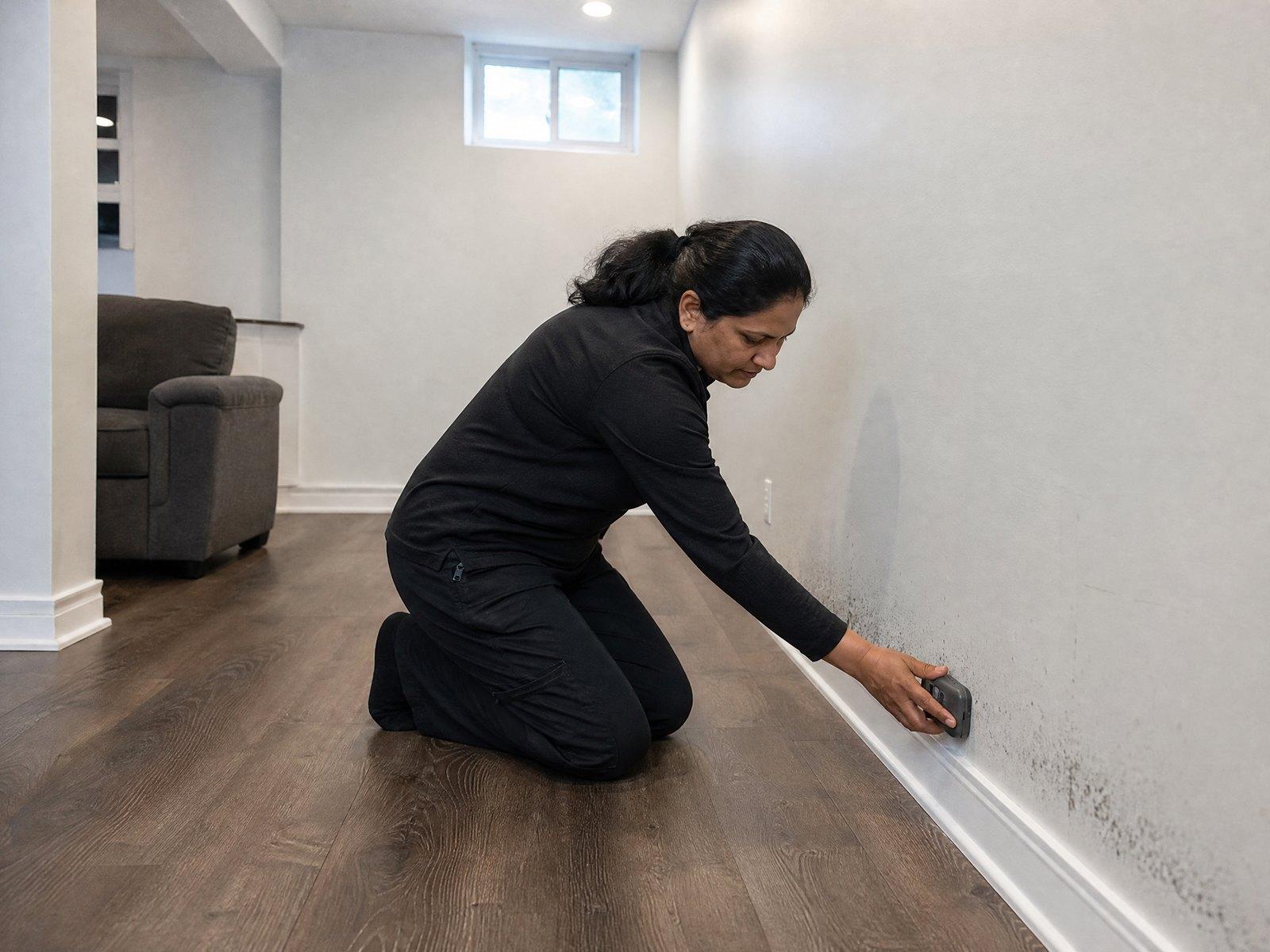
- Moisture readings on walls, floors and framing
- Containment and filtered air between the basement and upstairs
- Removal of wet drywall, insulation, carpet, underlay and baseboards
- Cleaning of studs, sill plates and concrete with HEPA vacuum and wire brush or sanding
- Damp wiping and a second HEPA vacuum pass
- Drying with fans and dehumidifiers
- Disposal of waste and protection of stairs and floors
- A written note on the likely cause of the dampness
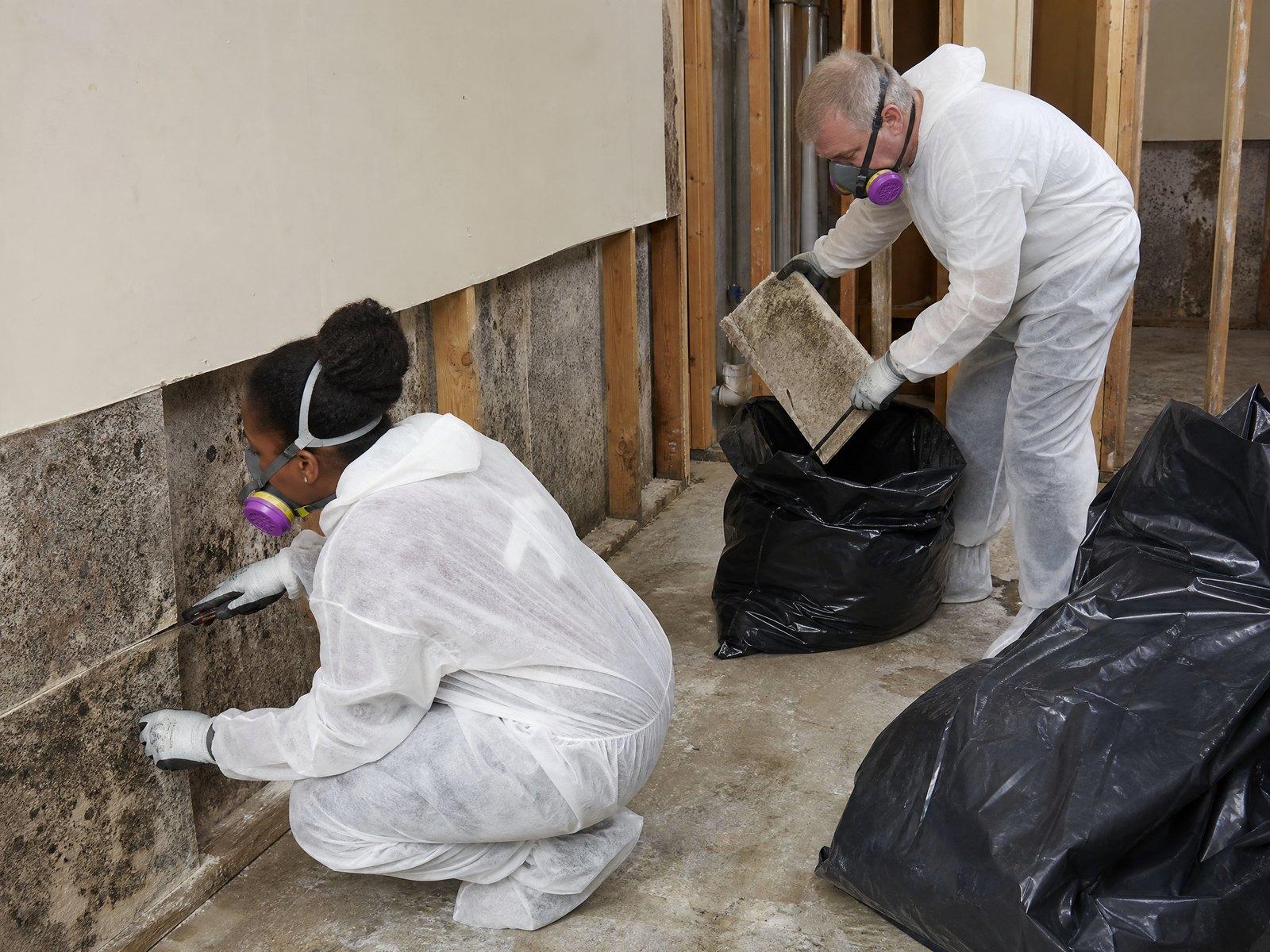
What mold in a basement often looks like
A musty smell that is strongest at the bottom of the stairs
Dark or green spots on baseboards, drywall corners or behind stored boxes
White crust on concrete or block walls, which points to water moving through
Carpet that feels damp or smells stale even when the room is dry
Peeling paint, warped paneling or bubbling floor finish
Condensation on cold pipes and windows in warm weather
How the work goes, step by step
Assess the damp
Readings and a visual check show where moisture is and how far the mold has spread.
Contain the area
Plastic barriers and filtered air keep spores in the basement during work.
Remove wet materials
Drywall, insulation and carpet that cannot be dried are cut out and bagged.
Clean and dry
Framing and concrete are cleaned and vacuumed, then dried until readings are normal.
Plan the moisture fix
The quote lists the repair or dehumidification needed to keep the basement dry.
What changes the price
- Finished or unfinished
- Unfinished concrete is cleaned in place, while finished walls need demolition and rebuild.
- Area and height
- A larger floor area and taller walls increase cleaning and removal time.
- Materials to remove
- Wet insulation, carpet and drywall must be taken out, bagged and replaced.
- Source of water
- A plumbing fix costs far less than a foundation or drainage repair.
- Drying time
- Dehumidifier and fan rental or equipment time depends on how damp the space is.
- Access
- Narrow stairs and no exterior door make removing waste slower.
What a good quote spells out
- The source of the water identified in writing, with a proposed fix
- A list of materials to be removed and those that will be cleaned and kept
- How the work area is separated from the rest of the house
- Whether the price includes drying equipment and how long it runs
- Rebuilding shown separately, so the cleanup scope is clear
Basement Mold Removal: questions people ask
Can finished basement drywall be kept?
Drywall with visible mold or that has stayed wet is usually removed. Surfaces with only a surface stain and dry cores may be cleaned, which an inspector can check with a meter.
Why does a basement smell musty when no mold is visible?
Mold may be growing inside a wall, under carpet or behind stored items. Moisture readings and a look inside suspect areas can find it.
Does a dehumidifier fix basement mold?
It helps control humidity and prevents regrowth, but it does not remove existing mold. Cleanup comes first and the dehumidifier maintains the result.
Is basement mold an emergency?
It is worth acting on soon, since growth spreads where damp persists. Active water entry, such as a leaking pipe, should be stopped right away.
Other Saniclair services
Mold or a Musty Smell? Get It Looked At.
Fill out the quote form with your city and what you are seeing. A local specialist follows up to book an inspection and give you a written quote. Free to request, no obligation.
Request a free quote →