Crawl Space Mold Treatment for Joists and Subfloor
Mold in a crawl space grows on the wood above your head: floor joists, the underside of the subfloor and any insulation hanging between them. Bare dirt floors, open vents in humid weather and plumbing leaks keep the air damp enough for it, and the air in the crawl space rises into the living space through gaps in the floor.
Describe the job and add your city. Free to request, no obligation.
Treatment is the cleaning and drying part of the job. Wet or contaminated insulation and debris are removed, and the wood is cleaned by HEPA vacuuming, scrubbing, sanding or blasting. Then the space is dried and the source of moisture is dealt with, whether that is a plumbing leak, drainage near the foundation, or humid air entering through open vents.
Full encapsulation, waterproofing and insulation upgrades are separate projects with their own scopes. This service covers the mold: cleaning it and giving you a clear picture of what is keeping the space damp.
What the work includes
- Entry check, photos and moisture readings of joists and subfloor
- Protective suits, respirators and filtered air for the crawl space
- Removal of wet insulation, loose vapour sheeting and debris
- Cleaning of joists and subfloor with HEPA vacuuming, scrubbing, sanding or blasting
- Damp wiping and HEPA vacuuming of surfaces
- Drying with air movers and a dehumidifier during the work
- Basic moisture measures: sealing obvious air gaps or a ground cover, if in scope
- Report on the likely moisture sources and next steps
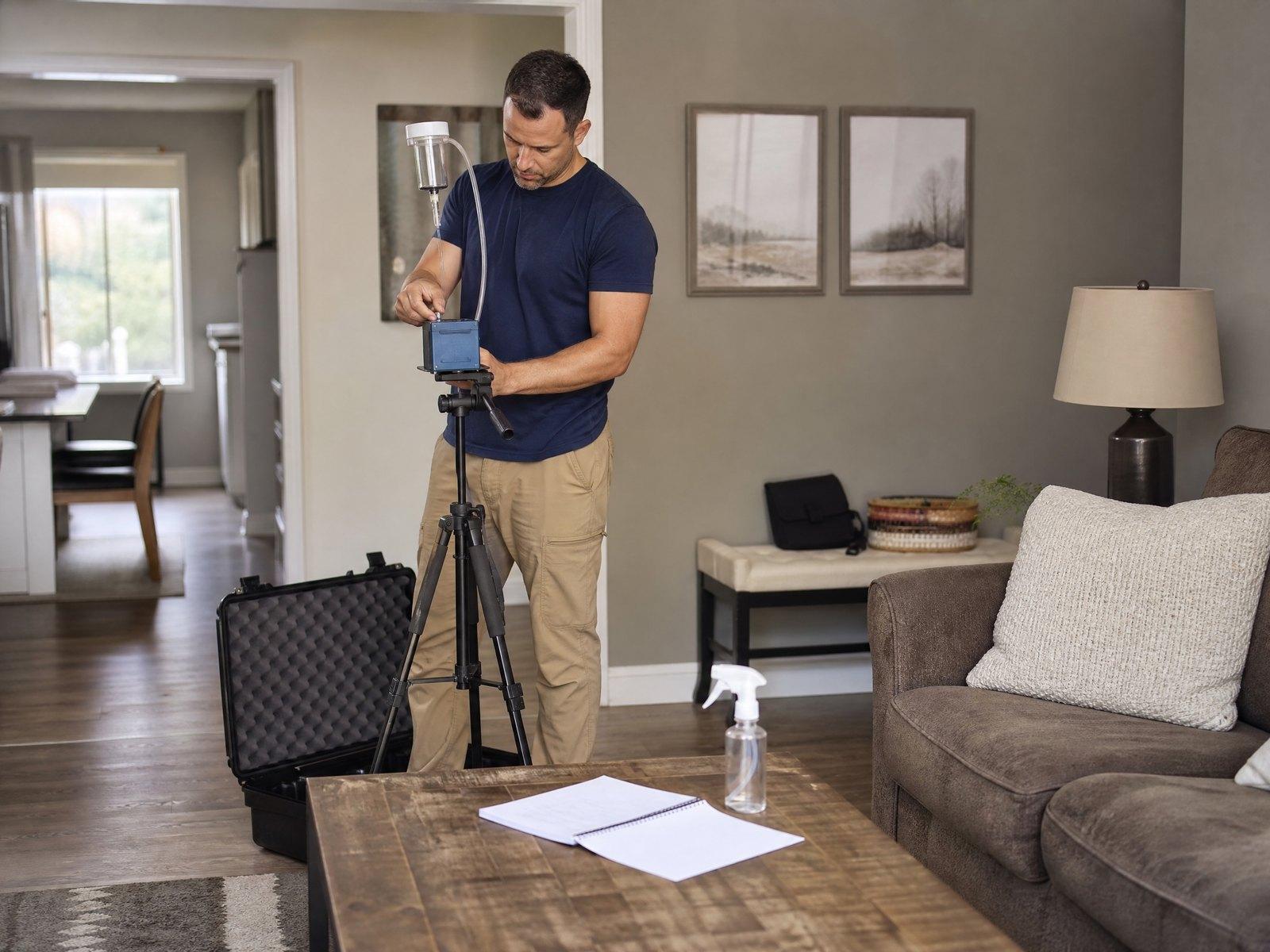
Crawl space signs worth checking
A musty smell coming through floor registers or in ground-floor rooms
Floors that feel cold, damp or slightly soft
Dark growth or white fuzz on joists, subfloor or insulation
Standing water, damp soil or condensation on pipes and ducts
Insulation sagging or fallen onto the ground
Pests or rot, which tend to follow persistent damp
How the work goes, step by step
Look and measure
The crawl space is inspected, photographed and checked for moisture and standing water.
Prepare and protect
The hatch is sealed from the house, and air filtration is set up.
Remove and clean
Wet materials are removed and wood is cleaned and vacuumed.
Dry the space
Air movers and a dehumidifier lower humidity before closing.
Plan moisture control
Options such as ground cover, venting, or a dehumidifier are explained with their own pricing.
What changes the price
- Access
- Low clearance and small hatches slow the work and limit equipment.
- Area and height
- A larger footprint and more affected wood increase time.
- Insulation and debris
- Removing wet batts and rubbish adds hauling and disposal.
- Cleaning method
- Scrubbing, sanding and blasting differ in time and cost.
- Moisture control chosen
- A ground cover and sealing vents cost less than a dehumidifier or drainage fix.
What a good quote spells out
- Photos from inside the crawl space before and after, with locations marked
- Which wood is cleaned, which is replaced and which is left alone
- What is done about insulation, and whether it is dried or replaced
- The moisture source named, with the proposed control listed separately
- Disposal and cleanup, since waste has to be carried out through the hatch
Crawl Space Mold Treatment: questions people ask
Should crawl space vents be open or closed?
Opinions and building rules differ by climate. In humid regions open vents can bring in moist air, while in others they help. The specialist should explain which approach suits your building.
Does crawl space mold affect the air inside the house?
Air moves up through the floor, especially around pipes and ducts, so odours and spores can reach living spaces.
Does crawl space insulation have to be removed?
If it is wet, fallen or contaminated, yes. Dry, clean insulation can often stay.
Can crawl space mold be treated and left alone?
Only if the moisture is addressed. Without a ground cover, drainage correction or humidity control, the growth tends to return.
Other Saniclair services
Mold or a Musty Smell? Get It Looked At.
Fill out the quote form with your city and what you are seeing. A local specialist follows up to book an inspection and give you a written quote. Free to request, no obligation.
Request a free quote →